

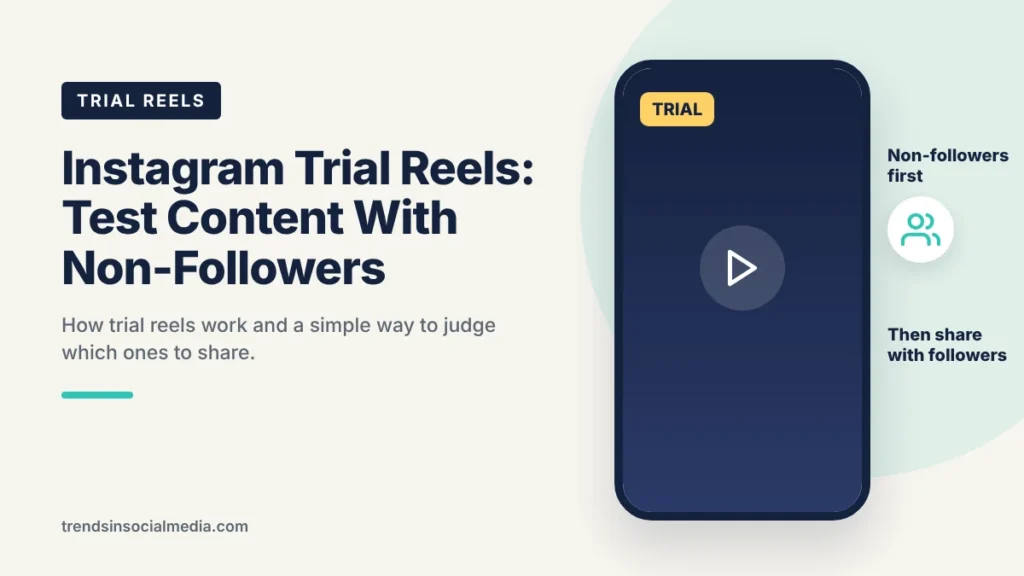
Every creator has hesitated before posting something new. A different format, a bolder hook or a topic outside the usual niche might reach a whole new audience, or it might fall flat in front of the followers who came for something else. For years the only way to find out was to post and hope. Trial reels changed that.
Introduced by Instagram in December 2024, trial reels let professional accounts show a Reel to people who don’t follow them before deciding whether to share it with their existing audience (Instagram for Creators). Used well, they work like a low-risk testing ground. Used carelessly, they become just another way to post and forget. This guide explains how trial reels work and how to turn them into a proper testing habit.
How Trial Reels Work
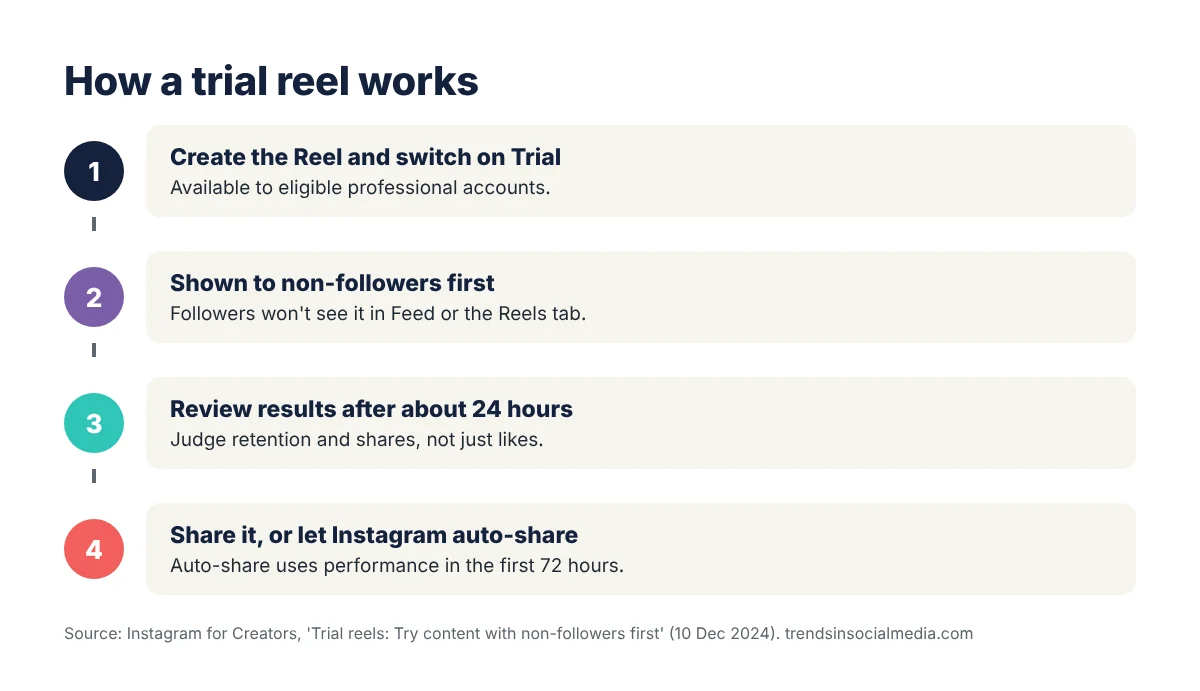
When creating a Reel, a professional account can switch on the trial option before sharing. Instead of going to followers, the Reel is shown first to non-followers. It doesn’t appear on the profile grid or in the Reels tab, and followers won’t see it in their feeds while it is in trial. Instagram says creators can see how the Reel is performing within about 24 hours, including views, likes, comments and shares from non-followers.
From there, the creator has a choice. They can share the trial reel with followers manually if it performed well, leave it as a trial, or turn on an automatic option that shares it with followers if it performs well with non-followers within the first 72 hours. That flexibility is what makes the feature useful: the decision is based on real data rather than guesswork.
Why Testing on Non-Followers Matters
Followers are not a neutral audience. They already know the creator, they’re used to a certain style and some of them engage out of loyalty. Non-followers are harsher and more honest. If a Reel can hold the attention of people who have never seen the account before, it has a better chance of being recommended more widely.
That matters because Instagram has described how it tests content with small groups of non-followers before expanding distribution, and how signals such as watch time and shares shape that process (Instagram for Creators). Trial reels let creators see that first step clearly, without the noise of follower engagement mixed in.
A Simple Testing Framework
The most useful trial reels test one thing at a time. A creator might publish the same video with two different opening lines, two versions of the same tip in different formats, or a familiar topic delivered with a new editing style. Changing only one variable makes it possible to see what actually caused a difference in performance.
After the first 24 hours, the numbers to compare are views, shares and how many people kept watching. A version that gets shared noticeably more, or holds viewers longer, is the stronger candidate to share with followers. It also helps to keep a simple log of each test, noting what was changed and what happened. Over a few weeks, patterns emerge: certain hooks consistently beat others, certain lengths hold attention better, certain topics travel further. Buffer’s hands-on look at trial reels is a useful companion for anyone setting up their first tests.
When to Use Trial Reels, and When Not To
Trial reels are ideal for experiments: a new series idea, a topic outside the core niche, a format the account has never tried. They’re also valuable for accounts trying to break out of a plateau, since they can test content aimed at a slightly different audience without unsettling existing followers.
They’re less useful for content that depends on the existing community, such as announcements, behind-the-scenes updates or replies to follower questions. Those posts are made for followers, and running them as trials only delays them. Timing still matters for the Reels that do go to followers, which we cover in our guide to the best time to post on Instagram.
Turning Test Winners Into Reach
A trial reel that performs well with non-followers is a strong candidate for wider promotion. Creators often share the winning version to their followers, repost it to Stories and encourage people to send it to friends, building on the ideas in this piece on using Reels shares to reach new audiences. Some also pair a proven Reel with paid support, whether that means Instagram’s own boosting tools, working with a growth agency for creators or using an Instagram views service. Views that don’t come from real viewers won’t produce the watch time and shares Instagram looks for, so any paid push works best on content that has already shown it can hold attention.
It is also worth remembering that early visibility compounds. A Reel that reaches the right first audience tends to keep finding new viewers, a dynamic explored further in why social media visibility matters before you go viral.
The Takeaway
Instagram trial reels let professional accounts test content on non-followers first, see results within about a day and then decide whether to share it with followers, manually or automatically within 72 hours. The real value comes from treating them as experiments: change one thing at a time, compare views, shares and watch time, keep a simple log and let the winners shape future content. Done consistently, trial reels turn guesswork into a repeatable way of finding what reaches new people.
